Pu’ah


Pu’ah 2023
Wool, organic cotton, soda ash, pomegranates tannin, aluminum acetate mordant, Madder roots, twin nylon tufting, nylon thread, gum resin, beewax.
24 inches x 24 inches x 180 inches
This work was commissioned by the Minnesota Museum of American Art for its window space. It received partial support from the University of Minnesota Twin Cities and the McKnight Foundation.
Special thanks to: Curators: Katya Oicherman and Laura Joseph. Exhibition Installer: Charles Schaffer. Studio Assistants: Martje Oostra and Calvin Stalvig
Photo Credit: Rik Sferra

Jerayah ג’ראיה
Carriers for Posterity, Installation view, 2022, curated by: Jehra Patrick
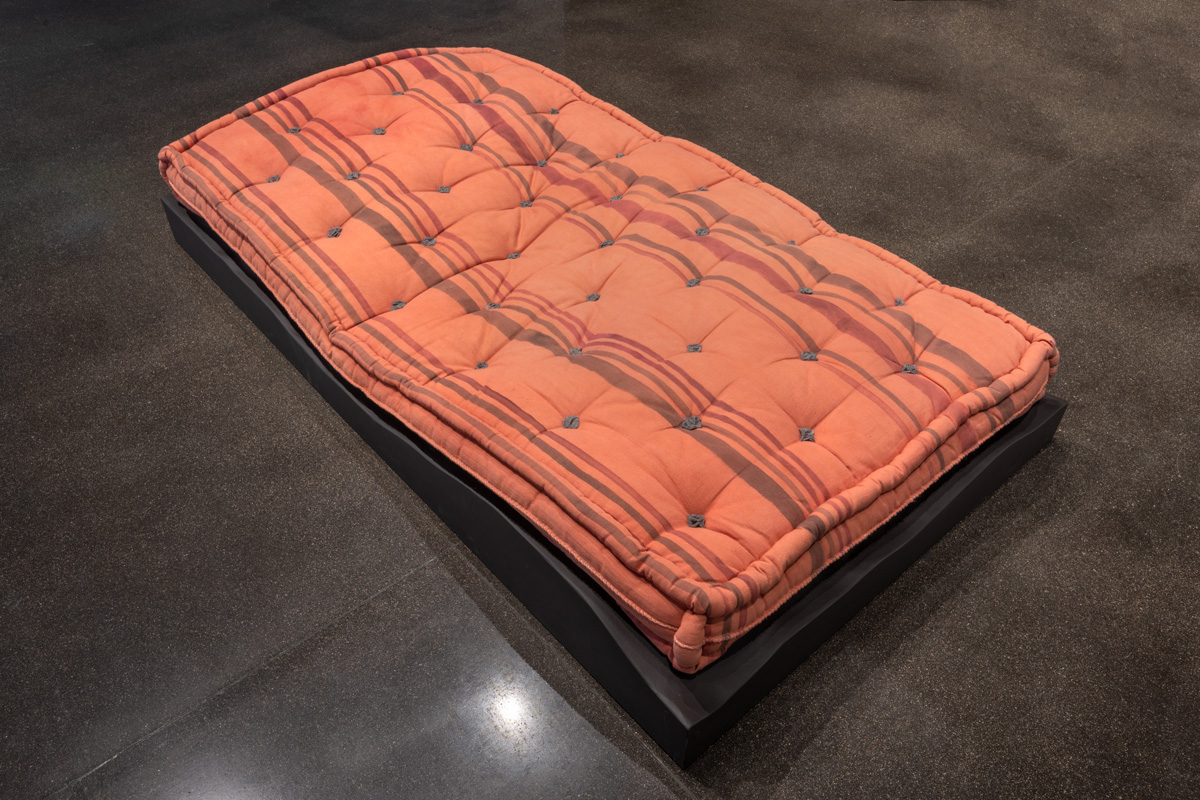
2020
It is hard to fathom the amount of people, places, generations and organizations that made it possible to produce this mattress. Each inquiry in the process brought about new people, insightful conversations, learning and teaching moments, as well as friendships. I will not be able to describe them all here and I am not even sure that this is the right platform to do so. When all is said and done, what I wish for you, the visitor in this exhibition to experience, is this object as is, right now in this space, next to your body.
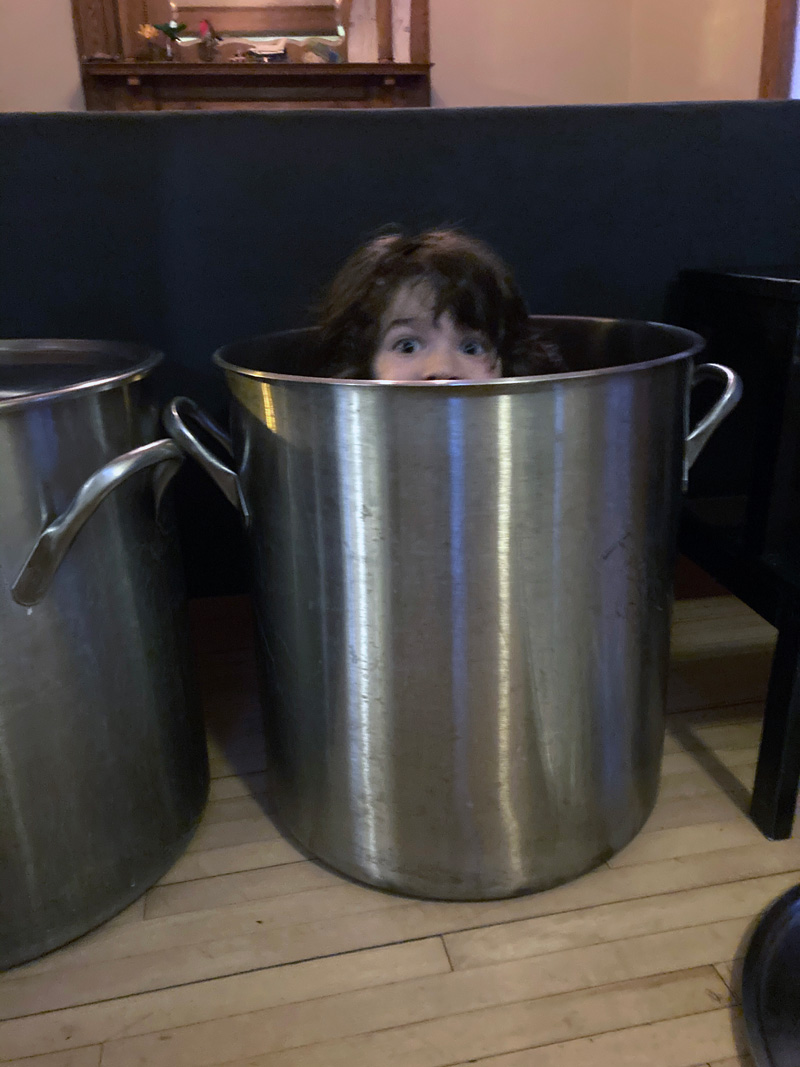
Still, with respect and appreciation to the people, the places, and to the activities that beckoned them to the aid of this endeavor, this word cloud attempts to illustrate the complex network of relations that formed as a result of the desire to make a hand-crafted wool mattress.


Mattress/ ג’ראיה (Jerayah)
Collaborator: Wendy Wustenberg
Project Assistant: Martje Oostra
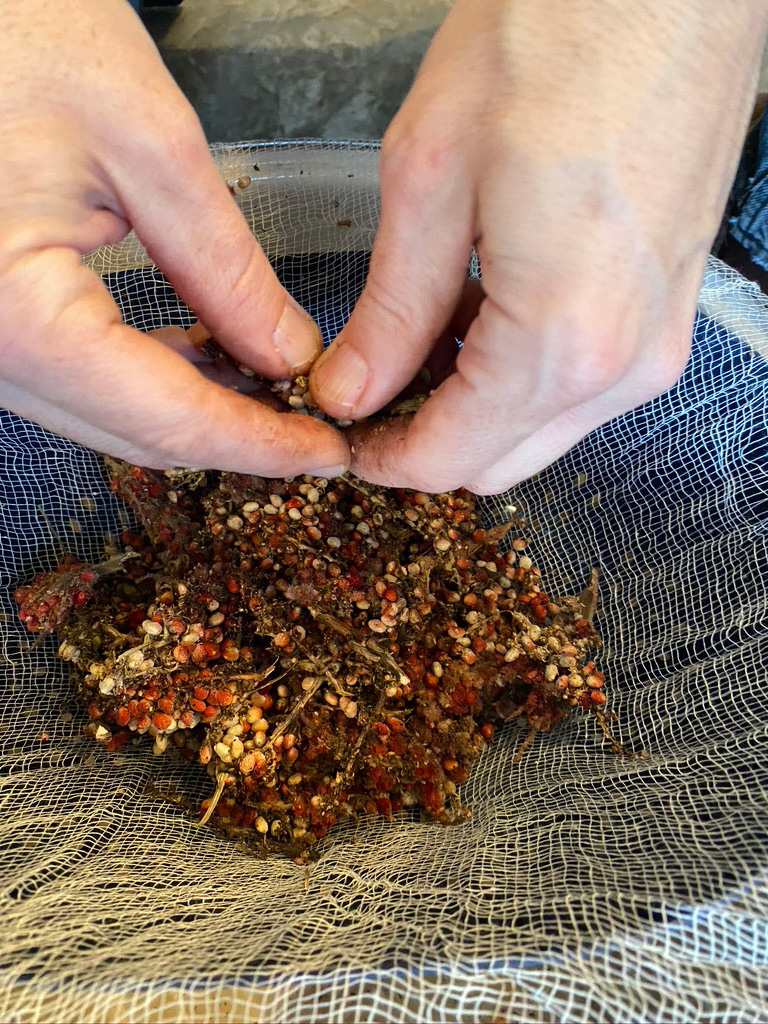
Leicester sheep’s wool, organic cotton herringbone, synthrapol, soda ash, gallotannin, aluminum acetate mordant, staghorn sumac flowers, iron, madder roots, twin nylon tufting, nylon thread, marino and leicester felt
Projected Supported by:
Windswept Hill Farm, Stove Works, University of Minnesota

Apertures
Apertures 2017


Credits:
Exhibition view at Ha’kibbuz Gallery, Tel Aviv.
Curated by Yael Kainy
Photo Credit: Ron Erde
Video Credit: Omri Zin
Performance during the exhibition reception: Eyal Fein
Special thanks to Robby Nowell
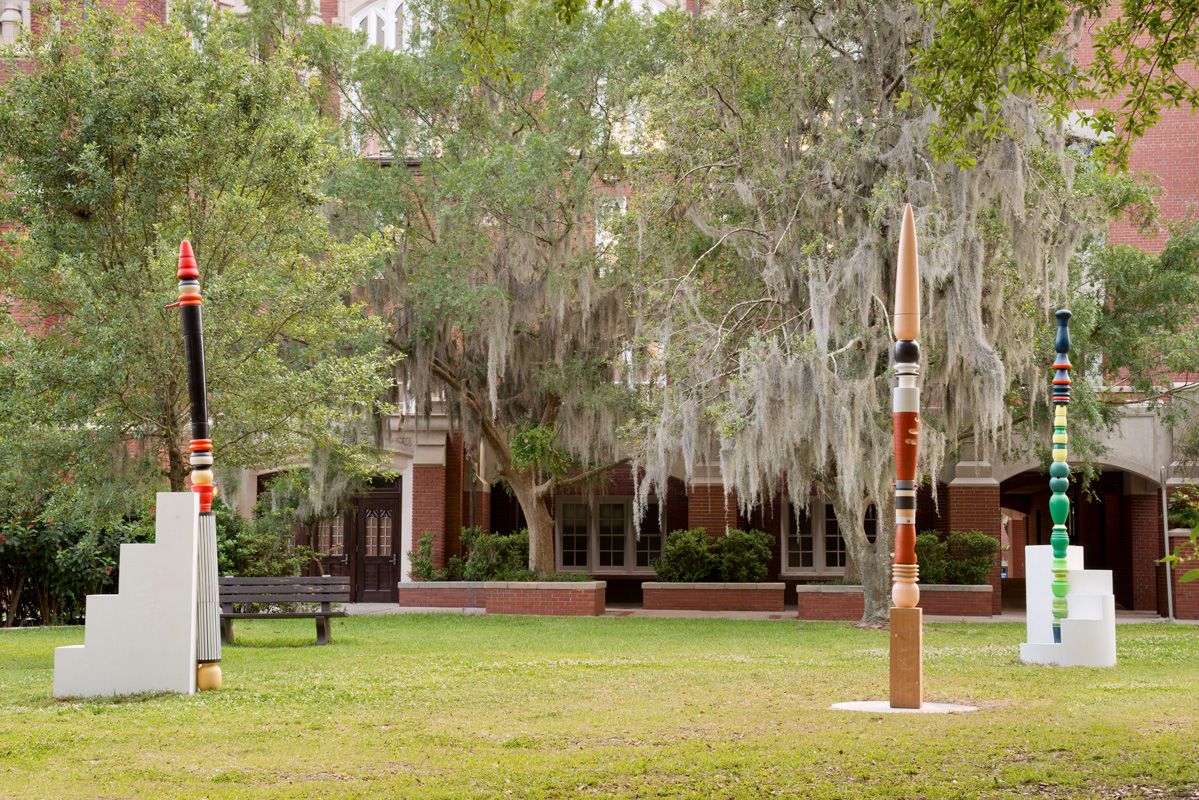
The Periplanómenos Whistles
The Periplanomenos Whistles


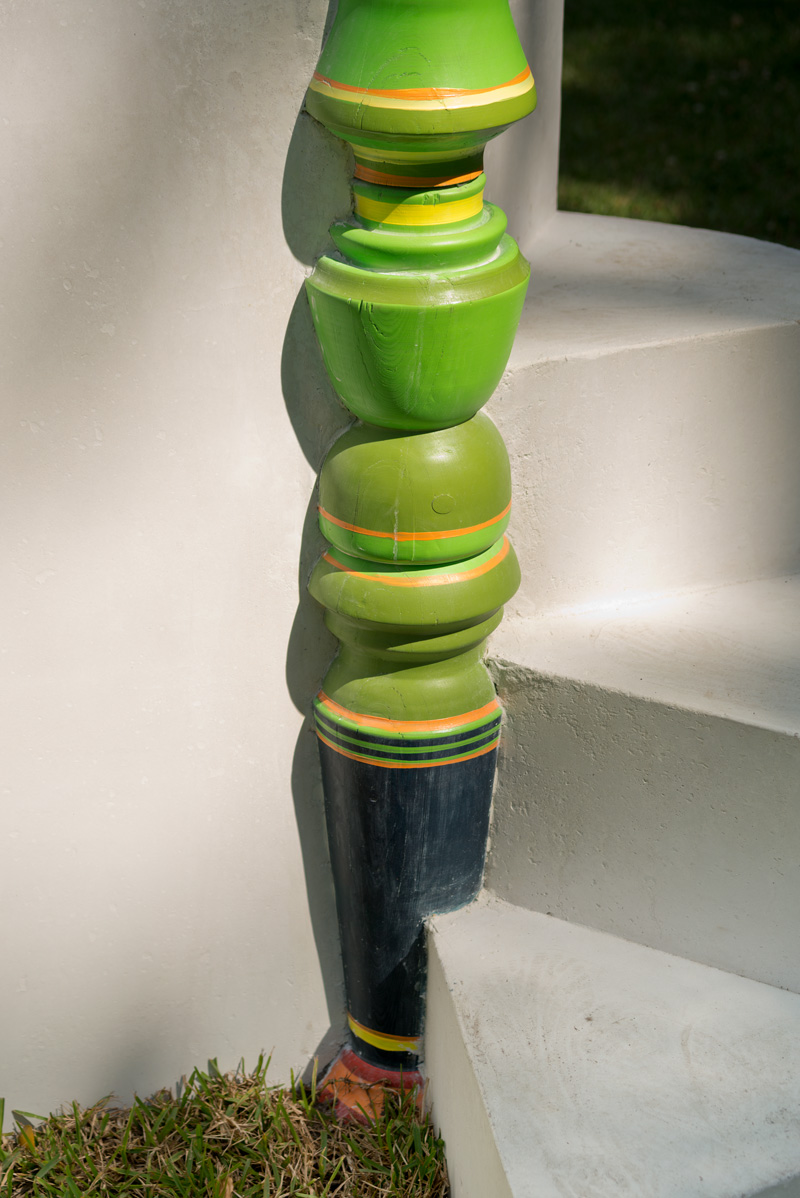


Credits:
The Periplanómenos Whistles by Rotem Tamir
In collaboration with Omri Zin
Performance by Dr. Kristen Stoner and The UF Flute studio
With the support of the Office of the Provost, Creative Campus Committee, School of Art and Art History, University of Florida.
And
Sculpture Space, Inc.
Photography by Allen Cheuvront
This is The Most Beautiful Dragon I Ever Saw
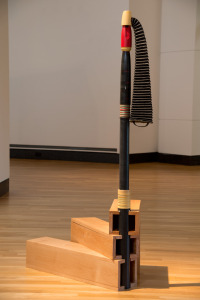
The following text was taken from the artist talk that took place during the show Solo :: Together, Harn Museum, Gainesville, FL
THIS IS THE MOST BEAUTIFUL DRAGON I EVER SAW was driven by my continuous interest in ephemeral objects and objects that change through time. In this case, although the object itself, or maybe I should call it the instrument, can change structurally, the ephemeral is actually in the person who this object belongs to.
I shall stop for a moment and explain what we see:
 In the bottom, you see the stairs that function as the case for the instrument when closed. When it’s open, you can see from one angle what the inside of the case looks like. The inside is exactly the negative space of the whistle, so it looks like a mold for the whistle but of course it helps to hold the whistle parts safely in place when closed. This is one of my continuous interests: how form is driven by function
When it is open, you see a dark hole, framed by red velvet and the alder wood with its pinkish/orangey color. For me this view helps to focus your look on the negative space. Every part of this object can be read as a shell. Every structure in this piece is hollow. And this is very important for me, creating environments that are based on a certain rule. When you create an environment, with nothing inside, nothing tangible, in a way you keep all the possibilities open, you are locking all the possibilities in one place. This is a micro environment- I am talking about the air that exists inside.
For me, this view of the cut box – it is like a chopped body part; it is not only because of the color but because the way I choose to split the box. It splits like the box in the “sawing a woman in half” magic trick. In general I can say that a lot of the visual decisions I made in this piece, are influenced by the world of magic tricks and circus.
 I said in the beginning that I have a continuous interest with the ephemeral, I used to make objects that do not last forever- that change through time and then died. Here obviously it is not the case, it is because the ephemeral is in the absence of the person that the object belongs to and in the functionally of the object. The person is a nomad and the functionality of the object is to extract sound, one tune to be precise. Sound does not last forever, it is here for a moment and disappears, and sound is created as a result of the way air moves in and out of the structure.
Moving on to the whistle- it is made from red and white oak taken from Richmond Virginia forest and air dried for around three years. BTW no one cut the tree but it is from trees that fell down in hurricane Irene, the color is milk paint and probably it is one of the oldest paint components. I should say that not by accident I am telling you about the materials. As I mentioned, for me this piece belongs to the nomad, and I am not talking about homeless here, I am talking about nomadic cultures, and as such the materials I choose to use are a result of where I was in the moment I made the object and the techniques I choose to use are through accumulated knowledge. Here it becomes very personal, because I, for the last four years now, don’t have a permanent place and I am part of a culture that is foreign to me in a way. So I took knowledge that I collected along the way while I am here.
Desiccator-1